7 Pro Secrets to Protect Your SPC Flooring from Ugly Scratches
Welcome to the definitive guide from Woocan Group, your premier spc flooring factory and global partner in high-performance building materials. If you have recently invested in China spc flooring, or are a wholesaler looking to provide the best advice to your clients, you know that while Stone Plastic Composite is incredibly durable, it is not invincible.
The hallmark of a premium spc flooring material is its rigid core and resilient wear layer, yet even the toughest surfaces can succumb to “ugly scratches” if not handled with professional care. As leading spc flooring manufacturers, we have seen every type of floor damage imaginable. Today, we are pulling back the curtain to share the industrial secrets that keep your floors looking pristine for decades.
Secret 1: Material Selection – The Foundation of Scratch Resistance
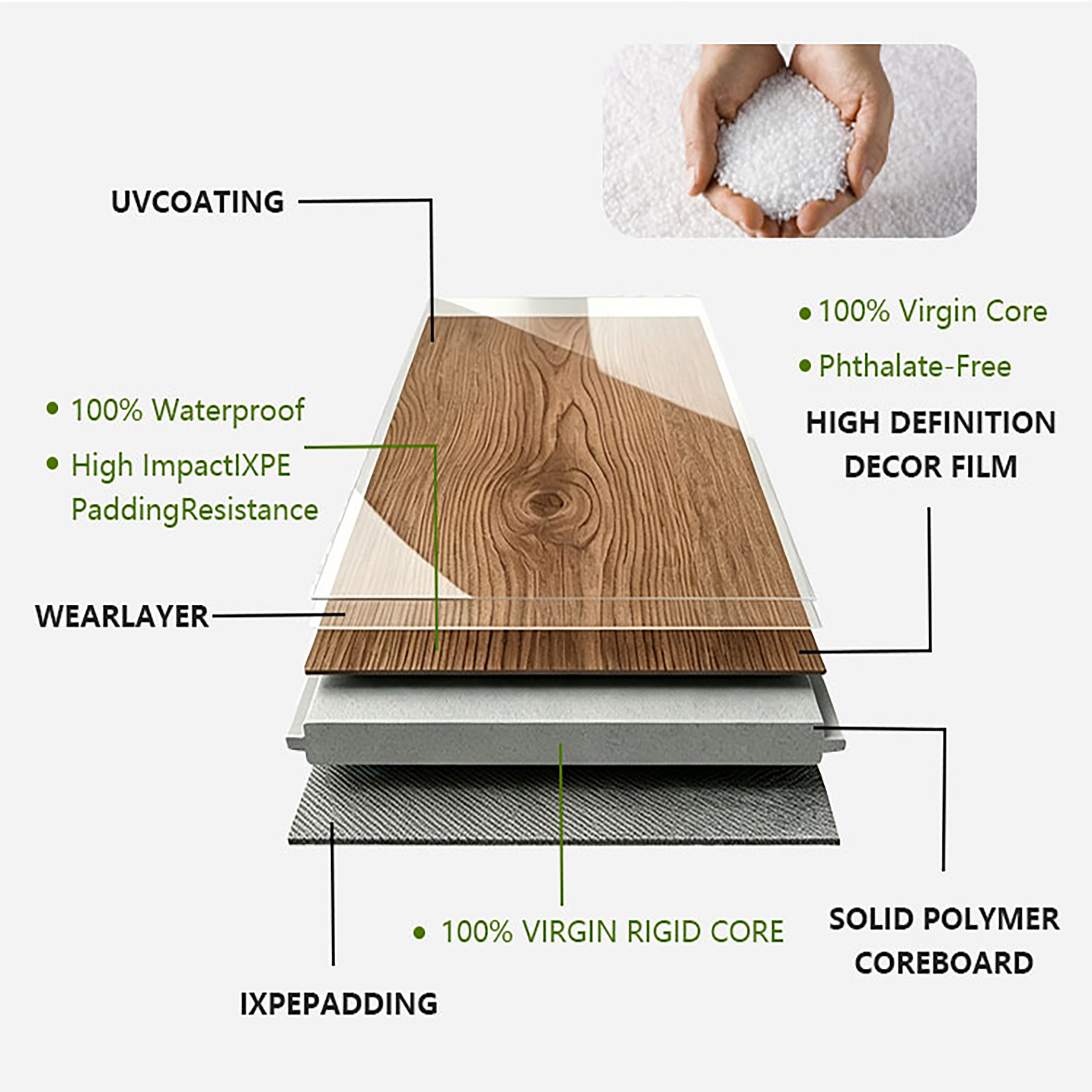
The first secret starts long before the floor is laid. Not all SPC products are created equal. When sourcing from an spc flooring supplier, you must scrutinise the density of the core and the thickness of the wear layer. At Woocan, our spc flooring material uses a blend of virgin PVC and natural limestone powder, achieving a core density of 1900-2100 kg/m³.
A thicker wear layer (0.5mm or 0.7mm for commercial use) provides a deeper buffer against physical impact. Cheaper alternatives often use recycled plastic which is softer and more prone to indentations. Always choose a product with a high-definition decor film protected by a heavy-duty wear resistant layer.
Secret 2: Precision Installation – Avoiding Edge Exposure
Many scratches actually start at the edges. If the click-lock system is not perfectly engaged, slight “lippage” (where one plank sits higher than another) creates a vulnerable edge. When you slide a chair or walk with hard-soled shoes, the protruding edge catches the pressure and chips or scratches.
As an expert spc flooring factory, we recommend using a professional tapping block and rubber mallet during installation. Ensure the subfloor is perfectly level (within 2mm over a 2-metre radius). A flat floor ensures the load is distributed evenly across the surface, rather than being concentrated on a single plank’s edge.
Secret 3: Advanced UV Coating – The Invisible Shield
Top-tier spc flooring manufacturers apply a specialized UV coating as the final step. This is not just for aesthetics; it provides a ceramic-bead reinforced surface that significantly reduces micro-scratching from dust and grit.
Our UV double-coating process at Woocan ensures that the floor remains resistant to staining and fading. It also provides an anti-bacterial layer, which is essential for modern health standards. When inspecting samples from a China spc flooring source, check the surface lustre—a consistent, matte finish often indicates a superior UV application compared to an overly glossy, thin coating.
Secret 4: Professional Maintenance Equipment – Beyond the Standard Mop
Maintaining the pristine appearance of your floor requires more than just a quick sweep once a week. To truly protect your investment, you must adopt a professional-grade cleaning protocol. As a leading spc flooring supplier, we often see clients use the wrong tools, which actually contributes to surface dulling over time. It is a common misconception that because SPC is “tough,” it can handle any cleaning implement. This could not be further from the truth. In fact, the higher the quality of your China spc flooring, the more you should invest in its preservation.
Firstly, let’s discuss the vacuum. While vacuuming is efficient, you must ensure your machine does not have a “beater bar” or a rotating brush in the “on” position. These stiff bristles are designed to agitate carpet fibres, but on a hard surface like China spc flooring, they can cause thousands of microscopic scratches that eventually make the floor look cloudy. Over time, these micro-scratches trap dirt, making the floor look perpetually “grey” or “dirty” regardless of how much you mop. Instead, use a vacuum with a soft-brush attachment or a dedicated hard-surface mode. Ideally, look for a vacuum with HEPA filtration to ensure that the dust you pick up is not simply redistributed onto the surface.
Secondly, the “wet mop” is a frequent culprit of floor damage. While SPC is 100% waterproof, using excessive water can push grit into the seams. We recommend using a high-quality microfibre flat mop. Microfibre is revolutionary because its split-fibre technology traps dirt and microscopic particles rather than just pushing them around. When you use a traditional string mop, the grit stays on the surface, acting like sandpaper under the mop’s pressure. The static charge generated by a dry microfibre mop is also an excellent way to “magnetise” pet hair and fine dust before you even start the damp-mopping process.
The cleaning solution itself is equally critical. Avoid any product containing wax, oil, or high concentrations of ammonia. These products leave a sticky residue that attracts even more dust. Instead, use a pH-neutral cleaner specifically formulated for vinyl or SPC floors. At our spc flooring factory, we suggest a “spray-and-mop” technique: lightly mist the microfibre pad or a small section of the floor, then wipe. This ensures the floor dries almost instantly, preventing any moisture from lingering in the click-lock joints. Furthermore, avoid “natural” cleaners like vinegar in high concentrations; the acidity can eventually break down the UV coating’s protective bonds.
Finally, consider the frequency of cleaning. In high-traffic zones, grit management is a daily task. Even a single day of neglected dust can lead to scuffing. By implementing a “no-shoes-indoors” policy and using professional-grade equipment, you significantly reduce the amount of abrasive material that enters your space. Remember, maintenance is not just about cleanliness; it is about preserving the mechanical integrity of the UV coating. A consistent schedule is your best defence against the cumulative effects of daily wear and tear. By spending five minutes a day with a dry microfibre mop, you are essentially extending the life of your floor by several years.
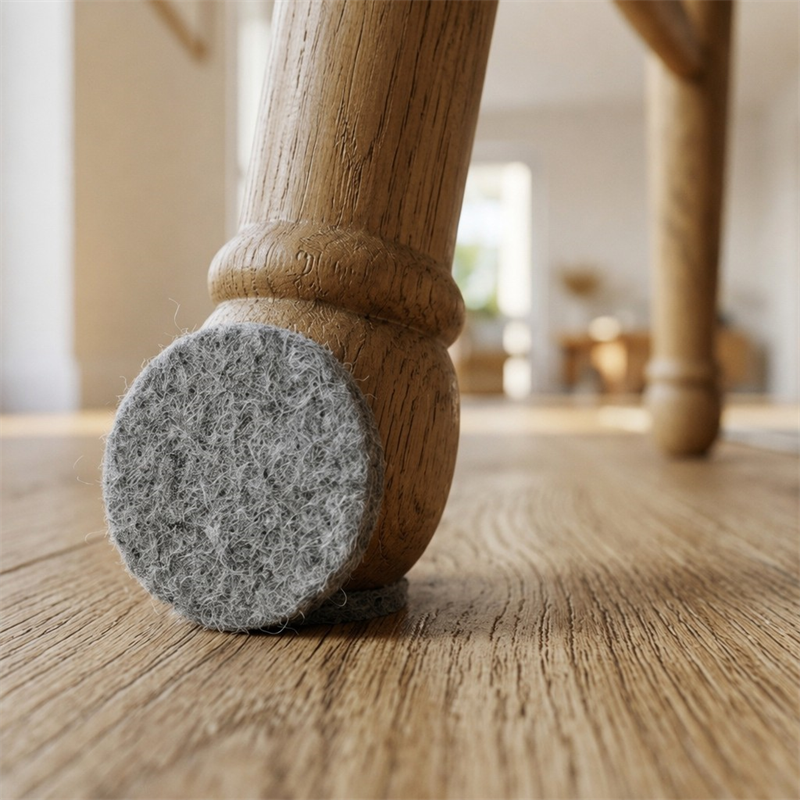
Secret 5: Strategic Padding and Furniture Management
Furniture is arguably the greatest threat to any hard-surface flooring. Whether it is a heavy mahogany table or a simple dining chair, the point-load pressure exerted by furniture legs can be immense. As seasoned spc flooring manufacturers, we have developed specific strategies to mitigate this risk. The pressure is often hidden; it only reveals itself when you move a piece of furniture and find a deep indentation or a long, jagged scratch.
The most common mistake is relying on the plastic caps that come with new furniture. These caps are often made of hard nylon, which can trap grit and scratch the floor as the furniture moves. The professional solution is to use heavy-duty felt pads. However, the secret lies in the quality and maintenance of these pads. We recommend thick, adhesive-backed felt pads that are at least 3mm to 5mm thick. For heavy items like sofas or wardrobes, use larger “furniture cups” or glides that distribute the weight over a broader area. A larger surface area reduces the “PSI” (pounds per square inch) exerted on the spc flooring material, ensuring the core remains uncompressed.
It is not enough to simply stick them on and forget them. Over time, felt pads collect hair, dust, and sand, becoming abrasive themselves. We advise our clients to inspect and replace felt pads every six months. If you see the felt becoming compressed or dirty, it is no longer protecting your China spc flooring; it is harming it. Think of it as the “oil change” for your interior design. Neglecting this small task can lead to permanent damage that is costly to repair.
For furniture with wheels, such as office chairs, standard hard-plastic casters are a disaster for SPC. They create “tracking” marks and can eventually wear through the UV coating. You must replace these with soft-surface “rollerblade-style” rubber casters. These are specifically designed for hard floors and provide a smooth, silent glide without any risk of scratching. Alternatively, use a high-quality polycarbonate chair mat that is clear and does not have “spikes” on the underside (which are for carpets). A good mat will have a smooth backing that “grips” the floor without causing friction.
When moving heavy appliances like refrigerators or washing machines, never slide them directly across the floor. Even with “anti-scratch” claims, the sheer weight can cause deep gouges. Use “air-sleds” or “appliance rollers,” or at the very least, lay down a 6mm sheet of plywood or hardboard to create a temporary “road” for the appliance to travel on. This ensures that the pressure is entirely absorbed by the board rather than the spc flooring material. Another tip is to use “moving blankets” underneath the plywood for an extra layer of shock absorption.
By treating your furniture as a dynamic component of your interior environment rather than a static one, you create a system of protection that handles the daily rigours of life. As an spc flooring supplier, we always provide a small kit of felt pads with our wholesale orders to encourage this culture of care among end-users. We believe that educating the consumer is as important as manufacturing the product itself.
Secret 6: Environmental Control – Temperature and Humidity Stability
One of the most overlooked aspects of floor protection is the environment itself. While SPC is marketed for its incredible stability compared to LVT or laminate, it is still subject to the laws of physics. Understanding the thermal and hygroscopic properties of your spc flooring material is a pro secret that few people discuss. Many assume that “waterproof” means “indestructible,” but environmental factors play a massive role in the long-term finish of the floor.
SPC is comprised of a limestone-plastic composite core. This makes it much more rigid than traditional vinyl. However, extreme temperature fluctuations can still cause the planks to expand or contract. If a room gets exceptionally hot from direct sunlight—such as in a south-facing conservatory—the planks can expand, causing them to push against each other. This creates tension at the click-lock joints, making them more susceptible to “joint-peaking,” where the edges rise slightly and become targets for scratches. When an edge is peaked, even a light breeze blowing a curtain across it can cause wear over time.
To prevent this, use UV-blocking window treatments. Curtains, blinds, or even professional window tinting can reduce the direct heat gain on the floor. Ideally, maintain your indoor temperature between 18°C and 29°C. This range is not only comfortable for inhabitants but also the “sweet spot” for SPC stability. If you are installing in a region with extreme seasonal changes, ensure that your spc flooring factory has provided a product with a low thermal expansion coefficient.
Humidity control is equally vital. Although SPC is waterproof, the subfloor beneath it might not be. High humidity can cause the subfloor to move or develop mould, which can indirectly affect the flatness of your SPC installation. A stable subfloor means a stable SPC surface. If the subfloor “heaves” or moves due to moisture, it creates voids beneath the SPC planks. When you walk on these hollow spots, the plank flexes, and the clicking system can break, leading to edge-scratching and floor failure. Using a high-quality vapour barrier (at least 6 mil thick) is a standard factory recommendation that should never be skipped.
Furthermore, consider the “acclimatisation” period. Even though SPC doesn’t absorb moisture like wood, it still needs to reach the ambient temperature of the room. We suggest leaving the boxes in the installation room for at least 48 hours. This ensures that the click-lock joints are at their most stable state before they are engaged. By respecting the physics of the material, you prevent the structural stresses that often lead to surface damage.
Material Performance Comparison Table
To understand why SPC is the superior choice for modern projects, let’s compare it to other common materials found in the market from various spc flooring manufacturers.
As you can see, the spc flooring factory process creates a product that balances the best attributes of several materials. However, this high performance is only maintained when the environment is managed correctly. If you are a buyer looking for a reliable spc flooring supplier, ensure they provide technical data sheets regarding thermal expansion coefficients. At Woocan, we ensure our products meet the strictest ISO standards for dimensional stability. Quality control is not just a phrase for us; it is a manufacturing imperative.
Secret 7: Immediate Action – Grit Management and Repair Protocols
The final pro secret is all about your reaction time and your defensive strategy. In the world of flooring, “grit” is the primary enemy. Microscopic sand, dirt, and tiny stones brought in from the outside act like thousands of tiny industrial diamonds that can cut into even the toughest finish. As an spc flooring factory, we recommend a “defence-in-depth” strategy for grit management, treating your floor like a high-security facility where no contaminant is allowed to pass the perimeter.
The first line of defence is external. Use a high-quality “scraper mat” outside every entrance. This removes the large debris, heavy mud, and coarse gravel. The second line is internal: a “walk-off mat” inside the door should be at least three paces long. This ensures that most of the moisture and fine dust are absorbed before the first step is taken on the China spc flooring. These mats must be cleaned frequently, or they simply become a reservoir for the very grit you are trying to exclude. We recommend vacuuming these mats daily and deep-cleaning them once a month to ensure they retain their “trap” functionality.
But what happens when a scratch does occur despite your best efforts? Accidents are an inevitable part of a lived-in home. The “pro” approach is not to panic, but to have a repair protocol ready. For very light, white surface scratches (which are usually just marks on the UV coating), a simple “floor polish” or a specialized “LVP scratch concealer” can work wonders. These products fill the microscopic groove and match the refractive index of the UV coating, making the scratch virtually invisible to the naked eye. It is an optical trick that restores the visual continuity of the wood grain.
For deeper scratches that penetrate the wear layer but haven’t reached the decor film, you can use a wax repair kit. These kits come with various wax blocks in different colours that can be blended and melted to match the specific wood grain of your spc flooring material. By carefully filling the scratch and levelling it with a plastic spatula, you restore the flat surface and prevent dirt from accumulating in the gouge. Once the wax hardens, it becomes nearly as durable as the original wear layer, providing a long-term solution that prevents the damage from spreading.
If a plank is severely damaged—perhaps from a dropped heavy kitchen knife, a heavy furniture move, or a sharp impact—this is where the beauty of the click-lock system truly shines. Unlike glue-down floors, a single SPC plank can be replaced without tearing up the entire room. While it requires some skill and patience to “un-click” the floor back to the damaged area, it is a permanent and professional fix that restores the floor to 100% of its original beauty. This “modular” nature of modern China spc flooring is one of its greatest advantages for long-term facility management.
As a leading spc flooring factory, we always suggest that our customers keep at least one full box of “spare planks” from the original production batch. Batch-to-batch colour variation is common among spc flooring manufacturers due to natural variations in decor film printing. Having original spares is the only way to ensure a perfect match for future repairs. Store these spares in a flat, dry place to ensure they remain in perfect condition. By being proactive rather than reactive, you ensure that your floor remains a source of pride rather than a source of stress.
Procurement Guide: 5 Tips for International Buyers
Navigating the world of spc flooring manufacturers can be daunting. Here are 5 tips from the Woocan factory experts:
- Request a Detailed Lab Report: Ensure the spc flooring supplier provides reports for Wear Resistance (EN 660-2), Fire Rating (EN 13501-1), and Formaldehyde Emission (EN 717-1).
- Verify Core Composition: Ask for the limestone-to-PVC ratio. A professional spc flooring material should be around 3:1 or 4:1. Avoid anything with “filler” materials like wood flour.
- Inspect the Click System: Request close-up photos of the click-lock profile. Look for clean, sharp edges. Poorly cut joints are the primary cause of installation failure.
- Check OEM Capabilities: If you are a brand, ask if the spc flooring factory can customise the carton design and the decor film. Woocan offers full OEM services for global distributors.
- Evaluate Logistics Support: A good China spc flooring partner handles more than just production. They should offer DDP shipping options and professional loading to prevent transit damage.
FAQ: Frequently Asked Questions
Q1: Is SPC flooring actually scratch-proof? No floor is truly scratch-proof. However, SPC is “scratch-resistant” due to its dense wear layer and UV coating. It outperforms hardwood and traditional vinyl in this regard.
Q2: Can I use a steam mop on my China spc flooring? We advise against it. The intense heat of a steam mop can weaken the click-lock joints and potentially damage the UV coating. Stick to microfibre mops and pH-neutral cleaners.
Q3: Why should I choose Woocan as my spc flooring supplier? We offer factory-direct prices, 100% virgin materials, and a commitment to British English standards of communication and quality control.
Q4: Does the thickness of the spc flooring material matter? Yes. While 4mm is standard, 5mm or 6mm provides better sound insulation and a more substantial feel underfoot. It also allows for a deeper click-lock profile.
Q5: Can pets damage the floor? SPC is pet-friendly! The wear layer is resistant to claws. However, keep pet nails trimmed and clean up accidents immediately to prevent staining.
Q6: What is the lead time for a container from an spc flooring factory? Typically, production takes 20-30 days, depending on the customisation requirements and current factory volume.
Q7: Is SPC flooring eco-friendly? Yes, our SPC is made from natural stone and virgin PVC, containing no formaldehyde or phthalates. It is also 100% recyclable.
Q8: Can I install SPC over underfloor heating? Absolutely. SPC has excellent thermal conductivity and is much more stable than wood when exposed to temperature changes.
Q9: Do I need a separate underlayment? Many of our products come with a pre-attached IXPE or EVA underlay. If yours does not, we recommend a 1mm or 1.5mm high-density underlay for moisture and sound protection.
Q10: How do I remove black scuff marks? Use a soft cloth with a small amount of WD-40 or a specialized scuff eraser. Always test on a small, inconspicuous area first.